
In the 1950s and 1960s, department stores often featured lunch counters to serve simple dishes to hungry shoppers. Though the stores themselves sold goods to individuals of all races, the lunch counters only served White customers.
In June 1960, sit-ins took place at lunch counters in Arlington as a peaceful protest aimed at integrating service at the lunch counters. These sit-ins were part of a movement across the South that vegan with sit-ins in Greensboro in February of that year. (This, in turn, had been influenced by the first recorded sit-in for racial equality at what is now the Kate Waller Barrett Branch Library in Alexandria.)
The sit-ins in Arlington began in North Arlington on June 9, 1960 at the Peoples Drug Store in Cherrydale, and spread to nearby lunch counters. These sit-ins were tumultuous, with counter-protesters employing violence and intimidation at some of the sites. Protesters declared a pause after June 10 to allow for the business owners to consider the protesters’ demands. However, after not receiving a satisfactory reply, they resumed their demonstrations on June 18, this time in South Arlington.
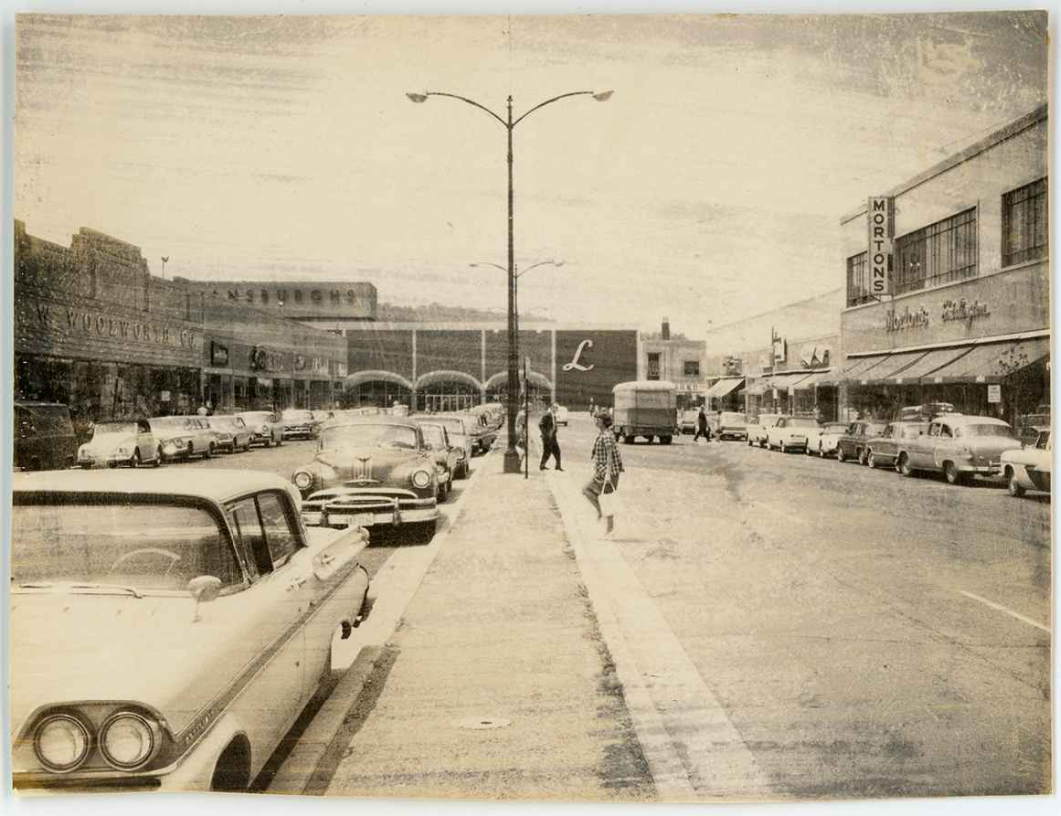
Campbell Avenue in Shirlington, with Woolworth’s on the left and Landsburgh’s in the middle. From the Charlie Clark Center for Local History, Arlington Public Library.
In contrast, the Shirlington sit-ins were peaceful. Several protesters, both White and Black, sat down at lunch counters at Woolworth’s and Lansburgh’s department stores. (Woolworth’s is roughly where Guapo’s is today. Landsburgh’s straddled the area between Peet’s and Hardwood Artisans, as Campbell Avenue was a block shorter than it is currently.) A White demonstrator — noted civil rights activist and Arlington native Joan Trumpauer — purchased two meals and gave one to her fellow demonstrator — future Maryland State Senator Gwendolyn Greene — who was Black. Soon afterwards, the lunch counters were closed and the lights turned off, although another Black protester was served food, probably by accident. Protesters remained at the darkened lunch counters for hours.
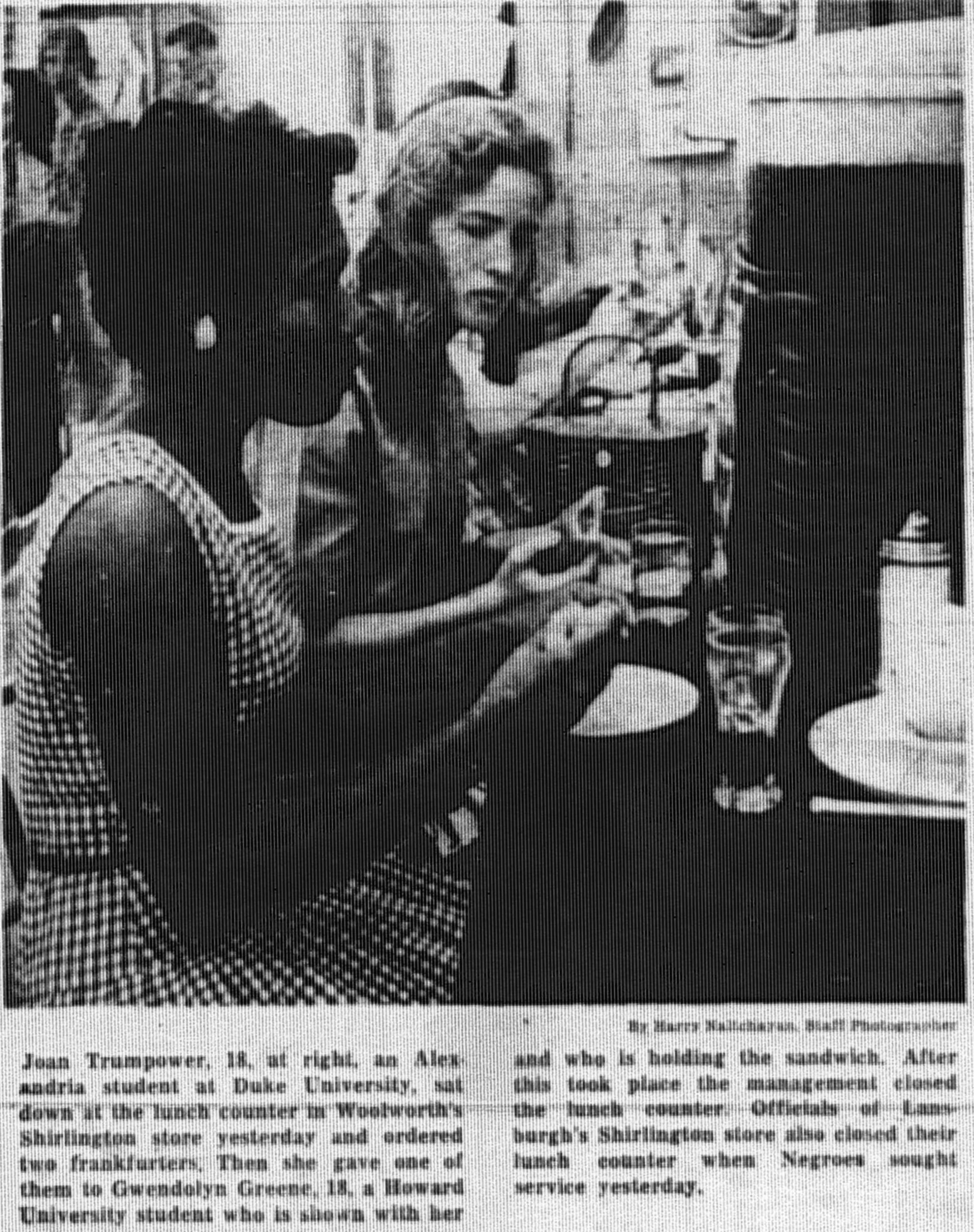
From the June 19, 1960 edition of the Washington Post.
This second round of protests were very effective. Within days, most chain lunch counters in Northern Virginia abruptly desegregated, even those that had not had any sit-ins. Contemporary commentators speculated that business owners were likely not opposed to integration, given that many owned integrated lunch counters in the District, but they had been fearful of being the first to integrate in Virginia.
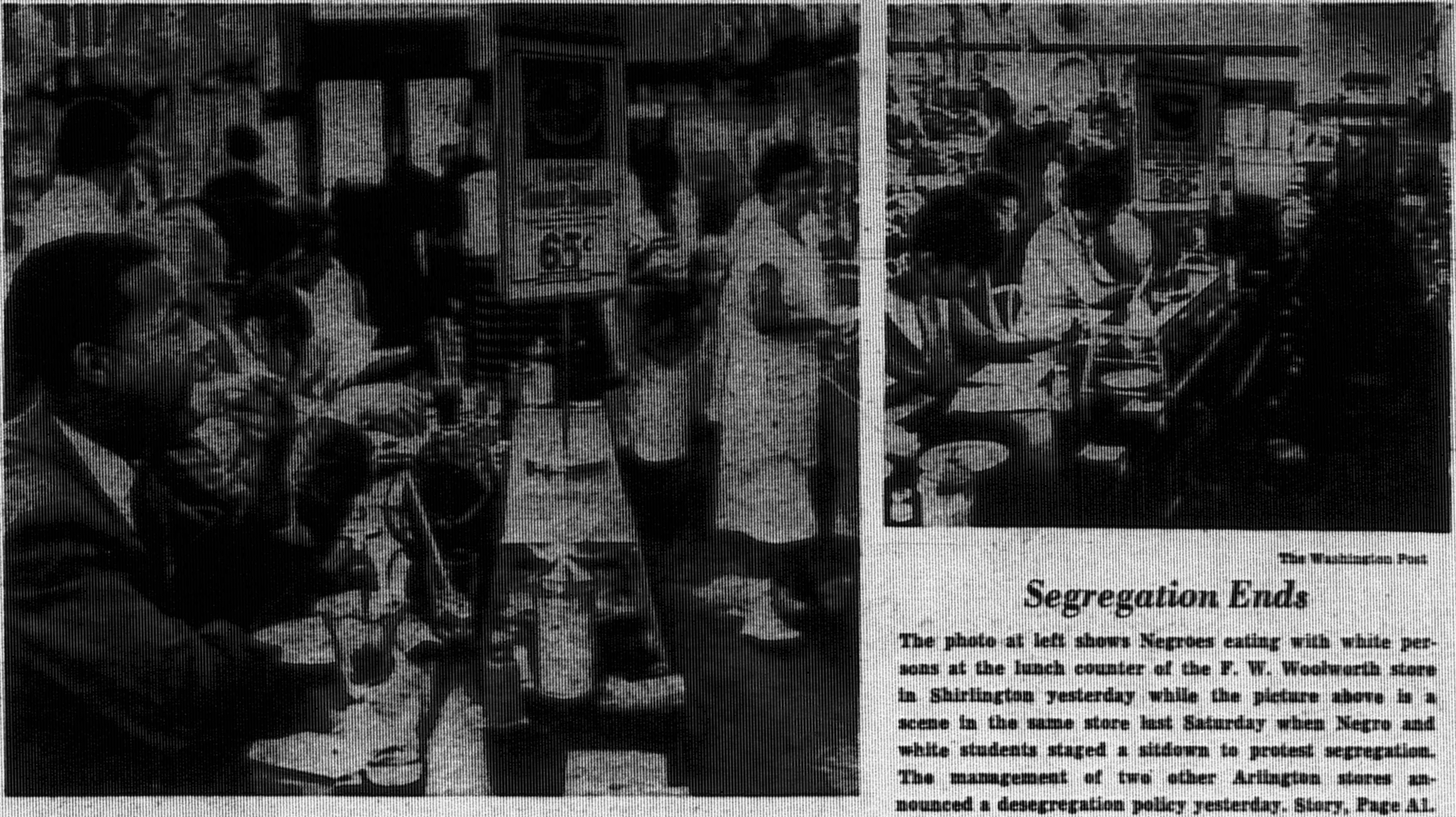
From the June 23, 1960 edition of the Washington Post.
Neighbors of all races sharing meals together in public was a significant step in the decades-long struggle for civil rights in Arlington.
Bibliography#
- Northern Virginia Sun. (1960, June 20). Sitdowners Pledge Prolonged Drive. Northern Virginia Sun, p. 3. https://www.virginiachronicle.com/?a=d&d=NVS19600620.1.3
- Associated Press. (1960, June 23). Three Arlington Firms Integrate Lunch Counters. Northern Virginia Sun, p. 3. https://www.virginiachronicle.com/?a=d&d=CTV19600623.1.3
- Fairfax County Journal-Standard. (1960, June 24). Lunch Counters Accede to Demand Of Sit-Down Group for Integration. Fairfax County Journal-Standard, p. 1. https://www.virginiachronicle.com/?a=d&d=FCJS19600624.1.1
- Anderson, J. (1960, June 19). Arlington Accepts Lunch Integration, Say Sitdowners. The Washington Post, Times Herald, p. B2. ProQuest Historical Newspapers.
- The Washington Post. (1960, June 21). ‘Sit-In’ Pair Charge Police Abused Them. The Washington Post, Times Herald, p. B3. ProQuest Historical Newspapers.
- McBee, S. (1960, June 23). 2 Drug Outlets, 3 Major Stores Desegregate Arlington Counters. The Washington Post, Times Herald, p. A1. ProQuest Historical Newspapers.
- McBee, S. (1960, June 25). Most Eating Places Drop Racial Bar: Plea to Citizens Prosecutor Shifts Stand. The Washington Post, Times Herald, p. A11. ProQuest Historical Newspapers.
- The Washington Post. (1960, June 26). Reaction To Sit-Down Is Praised. The Washington Post, Times Herald, p. A13. ProQuest Historical Newspapers.
- Anderson, J. W. (1960, June 26). Open Lunch Counters Set Precedent. The Washington Post, Times Herald, p. E2. ProQuest Historical Newspapers.