
Both Fairlington Elementary (built in 1943) and Abingdon Elementary (built in 1950) were segregated schools in their first years. All public schools were required by the state constitution to be segregated. Black students living in South Arlington attended Drew Elementary School.
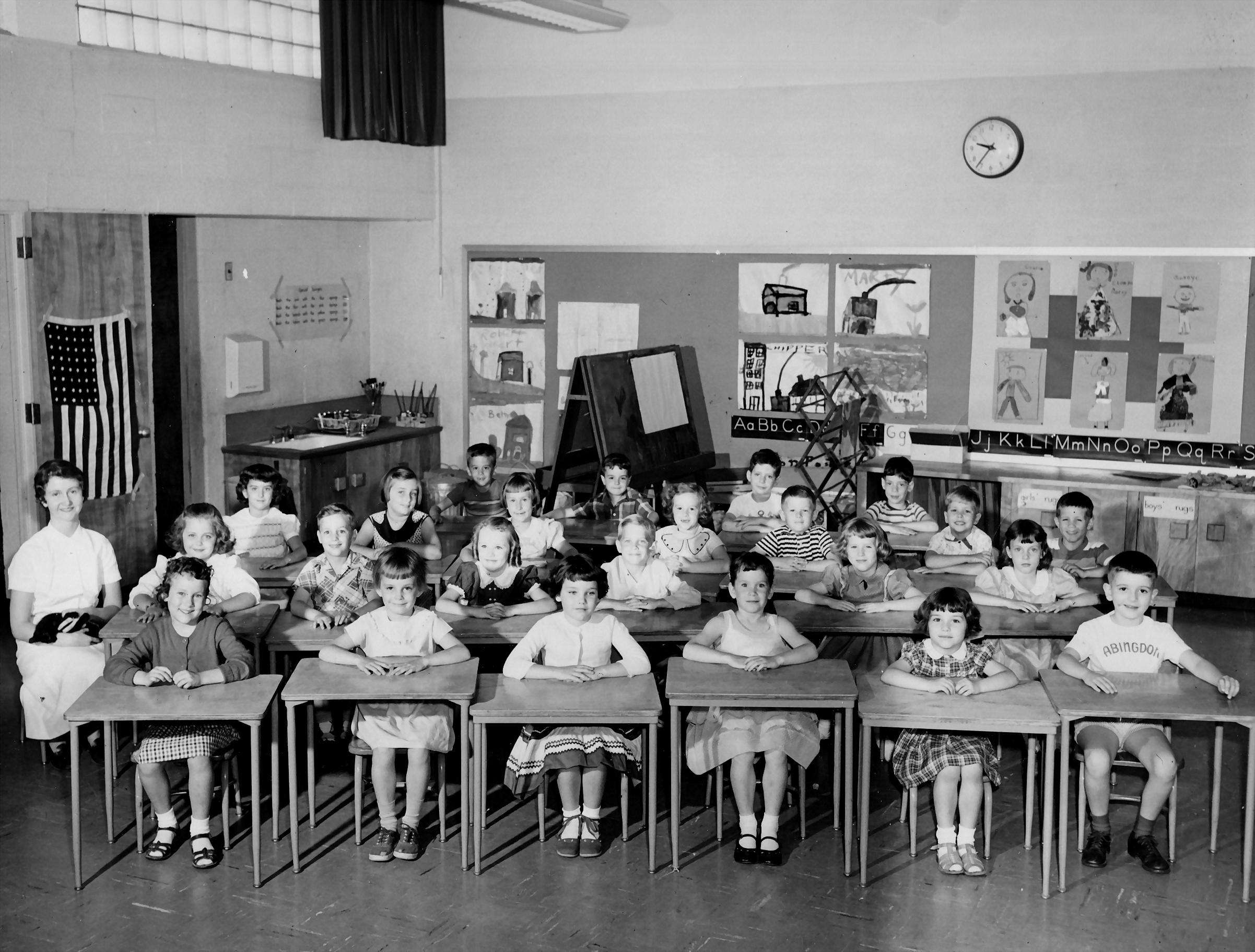
Ms. Wolcott’s first grade class at Abingdon, 1953-1954, while segregation was in force. Courtesy of Angela Church.
The Supreme Court ruled in 1954 that school desegregation was unconstitutional and ordered that they be integrated. In response, Virginia’s government employed a strategy of “Massive Resistance” to integration. Even still, Fairlington residents debated the merits of school integration. In 1955 the Abingdon PTA hosted a panel discussion on school integration, where mostly progressive panelists discussed how integration could be accomplished.
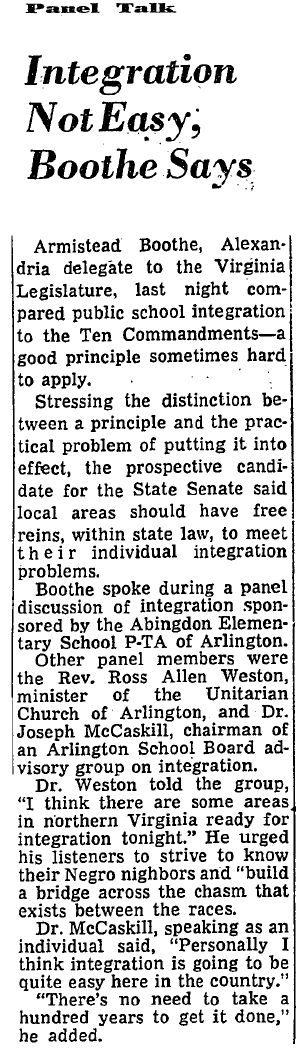
From the Northern Virginia Sun, March 1, 1955.
Later that year Virginia held a referendum on holding a constitutional convention intended to put in place rules closing any school that was ordered to integrate. The Abingdon and Fairlington PTAs, along with the Fairlington Civic Association, held a joint meeting at Abingdon Elementary where they symbolically voted against this proposal. The vote was unanimous, save for one person.

From the Northern Virginia Sun, December 12, 1955.
The proposal was broadly unpopular for a couple of reasons. Then, as now, Arlington tended to be more progressive than the rest of Virginia. Even if parents in this area were not enthusiastic about school integration, they would rather have their children attend an integrated school than no school at all. Also, most parents also did not want to spend the resources (personally or as a community) to build and manage private schools whose intent was to continue segregation (“segregation academies”), as happened in other parts of the state.
Both of the meetings described above occurred in Abingdon’s multi-purpose room, which is now divided into two preschool classrooms.
Massive Resistance ended in 1959 with the court-ordered integration of Stratford Junior High School, now Dorothy Hamm Middle School. However, many schools in Arlington stayed segregated for several years, including Abingdon and Fairlington Elementary Schools. Both schools primarily or exclusively pulled students from rental communities that practiced racial discrimination. (This will be discussed in greater detail in a future article.) This includes Fairlington, which was a rental community at the time. As a result, no Black students attended either school for several years although it would have been legal to do so.
The Fairlington Historical Society was able to locate records for when each school in Arlington was integrated. (See below.) Fairlington Elementary admitted Black students for the first time in 1965. Those first two students apparently either graduated or unenrolled, and the school returned to being segregated afterwards. Abingdon admitted Black students for the first time in 1968.
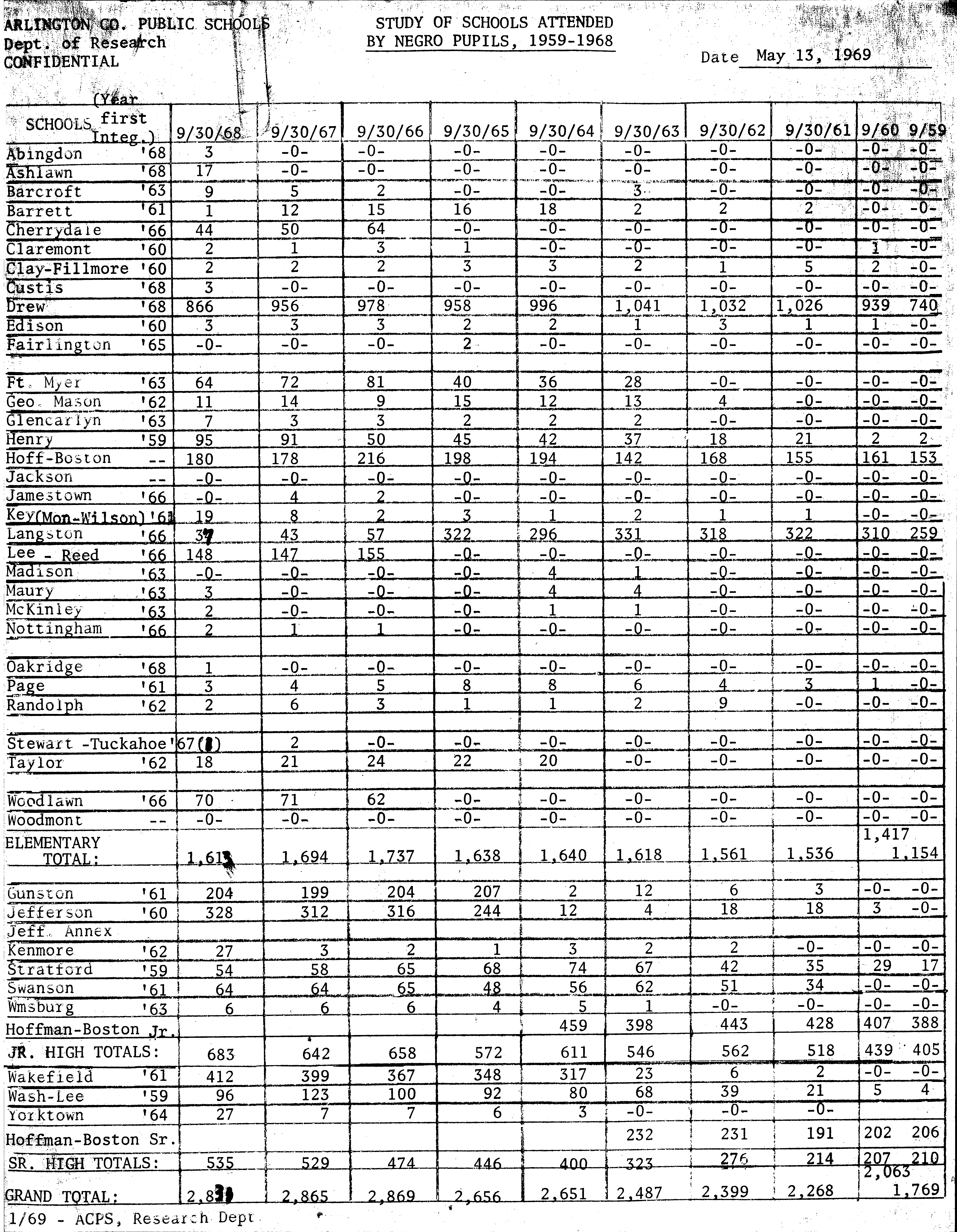
From the Charlie Clark Center for Local History, Record Group 69, Series 3, Box 8, File 10.
The Fair Housing Act of 1968 imposed financial penalties on rental communities that discriminated on the basis of race, which may have hastened Abingdon’s integration, as well as that of the larger Fairlington community.
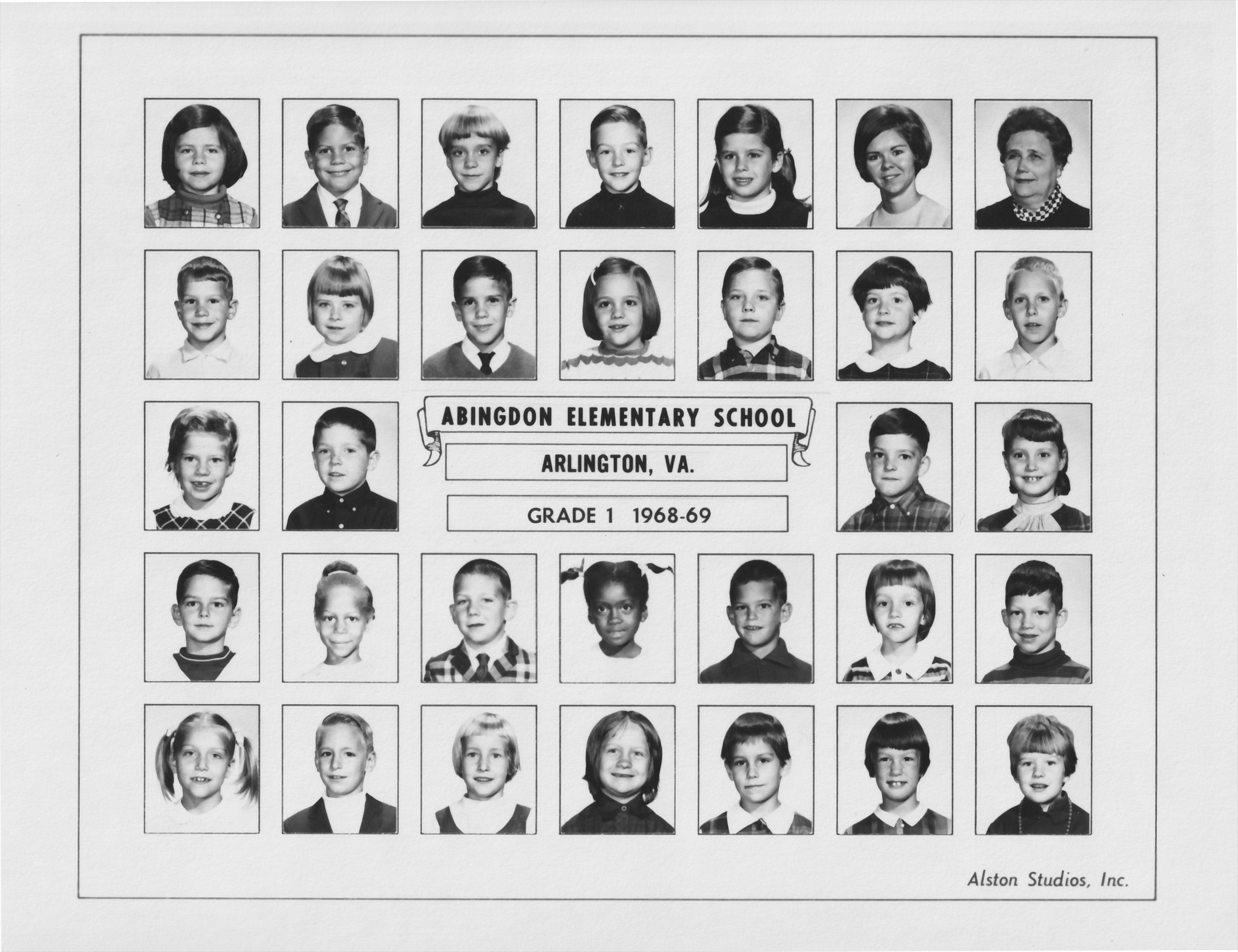
Abingdon Elementary lent the Fairlington Historical Society yearbooks from the 1960s, which included photos of the school’s first Black students. One of those students was contacted and briefly described her time at Abingdon unfavorably due to racial discrimination.
A page from the 1968-1969 Abingdon Elementary School yearbook. Courtesy of Abingdon Elementary. A page from the 1968-1969 Abingdon Elementary School yearbook. Courtesy of Abingdon Elementary.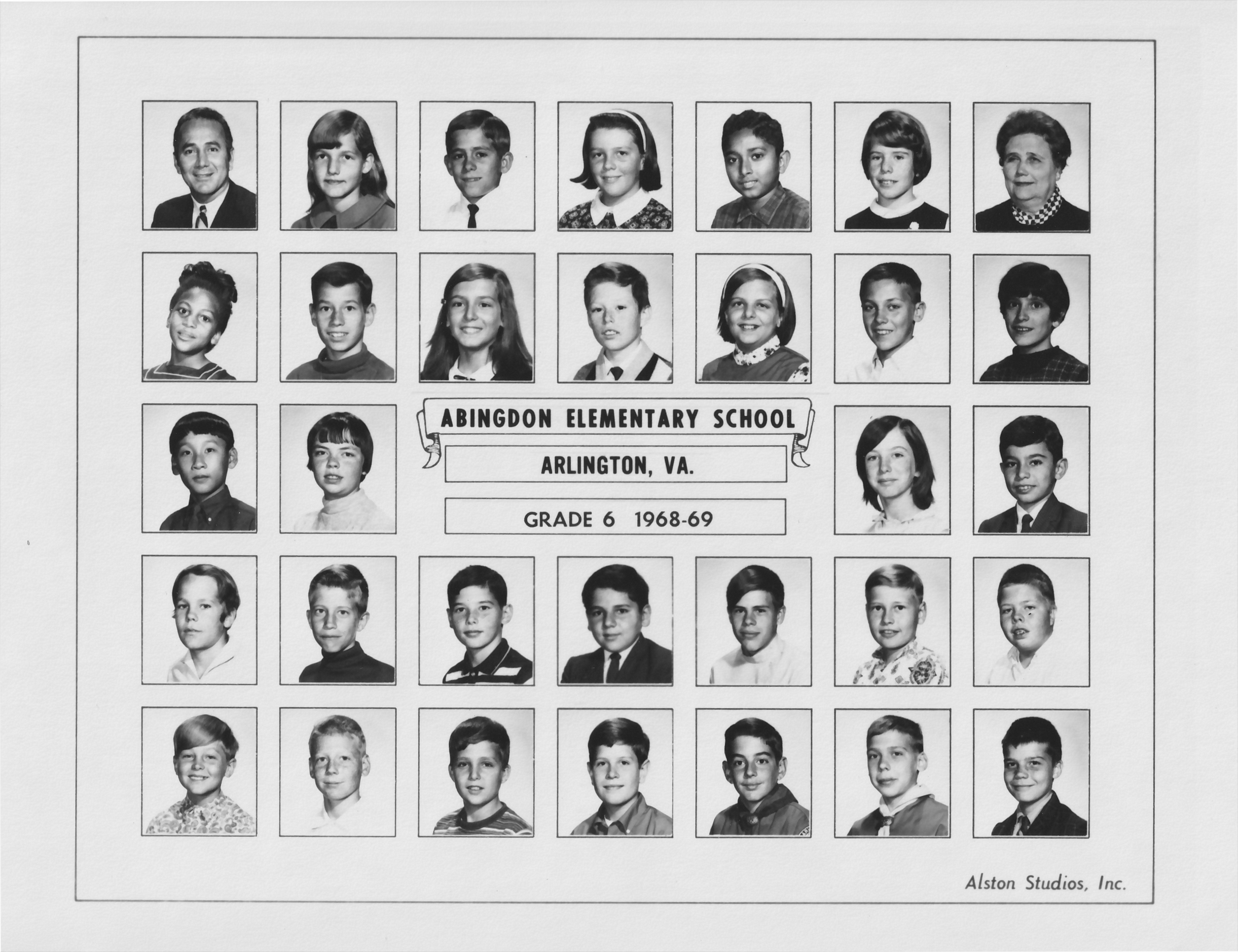
Arlington Public Schools (APS) put in place a busing program in 1971 which compelled Black residents of Green Valley to send their children to other schools, including Abingdon and Fairlington. This was ostensibly to integrate Drew Elementary, which had an almost entirely Black student body, though APS declined to require that any students in other neighborhoods be bused. This led to a marked increase of the diversity of both Abingdon and Fairlington Elementary Schools, though it was incredibly unpopular among those families whose children were being bused. This program persisted for decades.
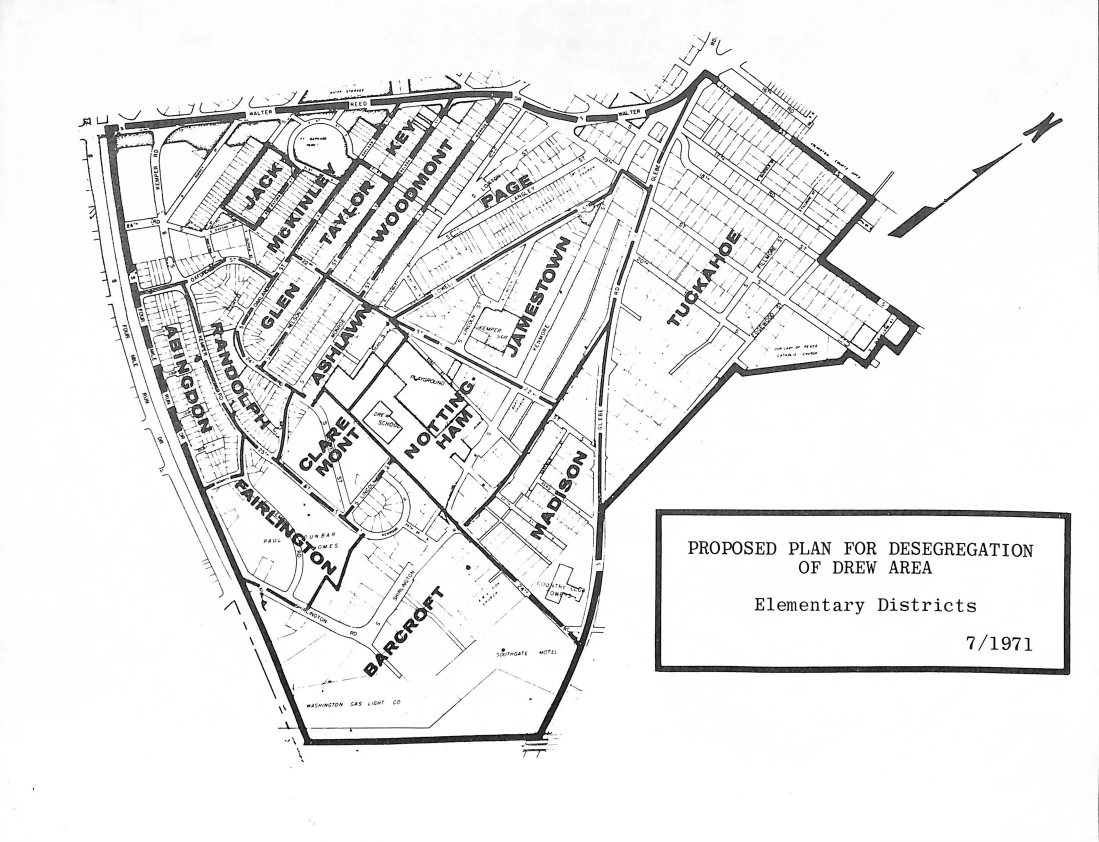
Busing in Green Valley in 1971. From the Charlie Clark Center for Local History.
Abingdon’s share of bused students increased upon the closure of Fairlington Elementary School in 1983.
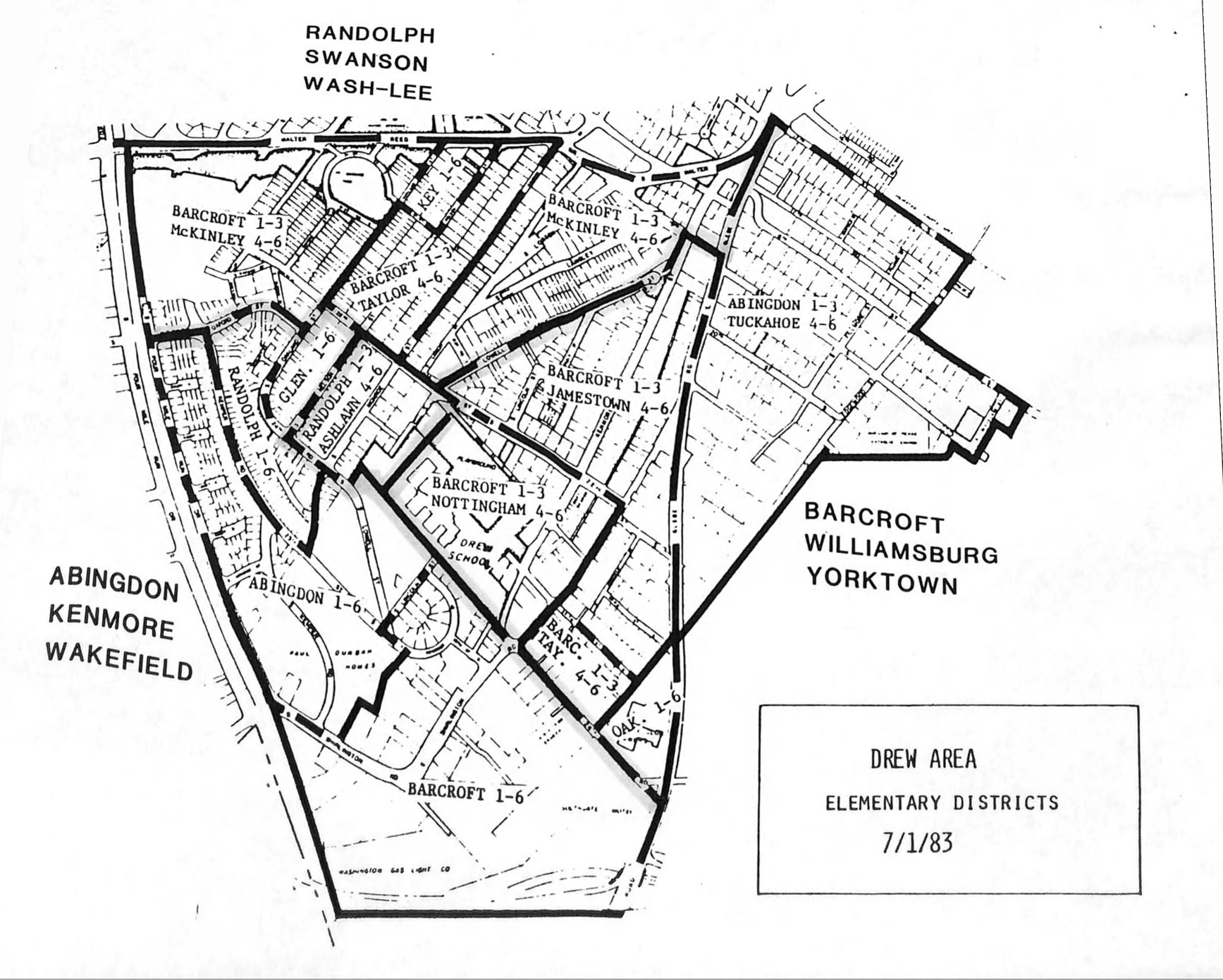
Busing in Green Valley in 1983. From the Charlie Clark Center for Local History.
Abingdon continued to be a destination for bused students long after other schools had stopped due to its relative proximity to Green Valley.
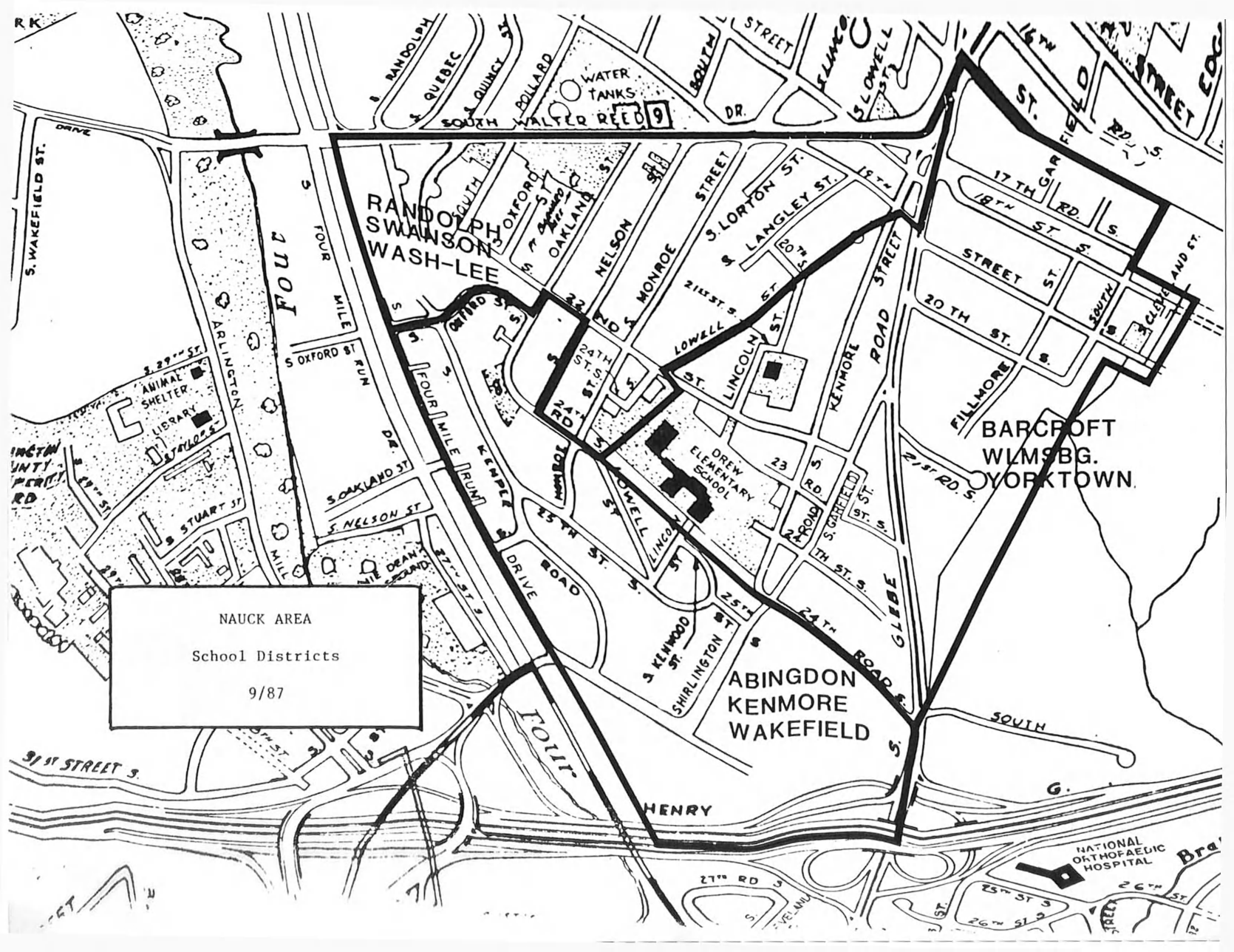
Busing in Green Valley in 1987. From the Charlie Clark Center for Local History.
Each year, a volunteer with the Fairlington Historical Society presents this history to each fourth grade class at Abingdon as part of their Virginia Studies unit. Many of the fourth grade classrooms currently in use were part of the original 1950 building and consequently were, at one time, segregated. The presentation can be found here.